
Asphalt Mine
asphalt mine history
Tucked into the high country of eastern Utah, just beyond the coal camps of Sunnyside, lies a rich and little-known chapter in America’s industrial past: the story of natural rock asphalt. For decades, these rugged canyon walls supplied a unique mineral blend—10% asphaltum and 90% sand—that paved roads across the nation. From the bustling heyday of aerial tramways and mountain quarries in the late 1940s, to the final flickers of experimental tar sands operations in the 1980s, the Sunnyside region bore witness to cycles of boom, decline, and reinvention. This article traces the arc of that history—through the rise of Ute Rock Asphalt, the shift from mining to refining, and the ambitious but short-lived energy schemes that followed—offering a grounded look at the people, technology, and economic tides that shaped one of Utah’s most overlooked industries.
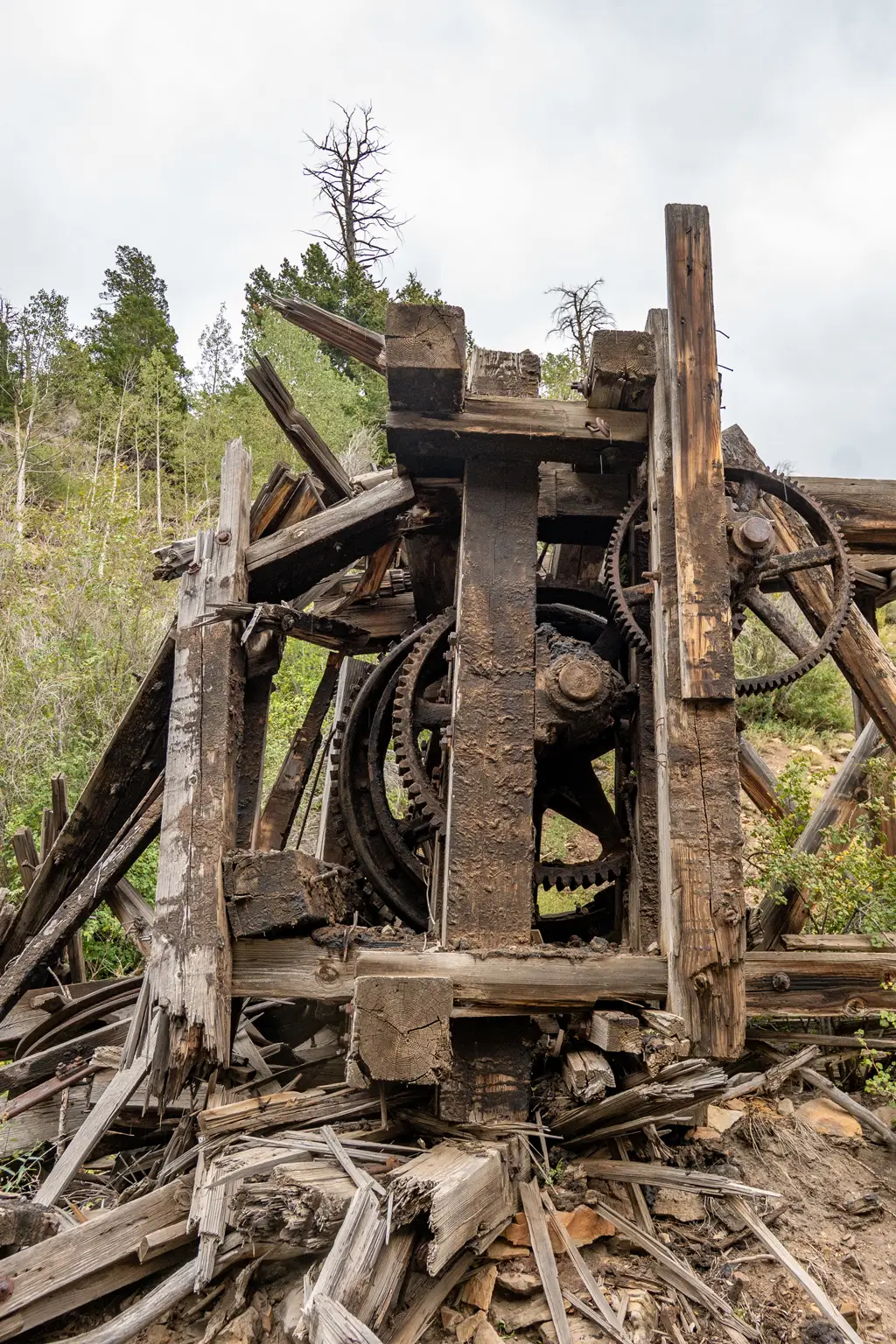
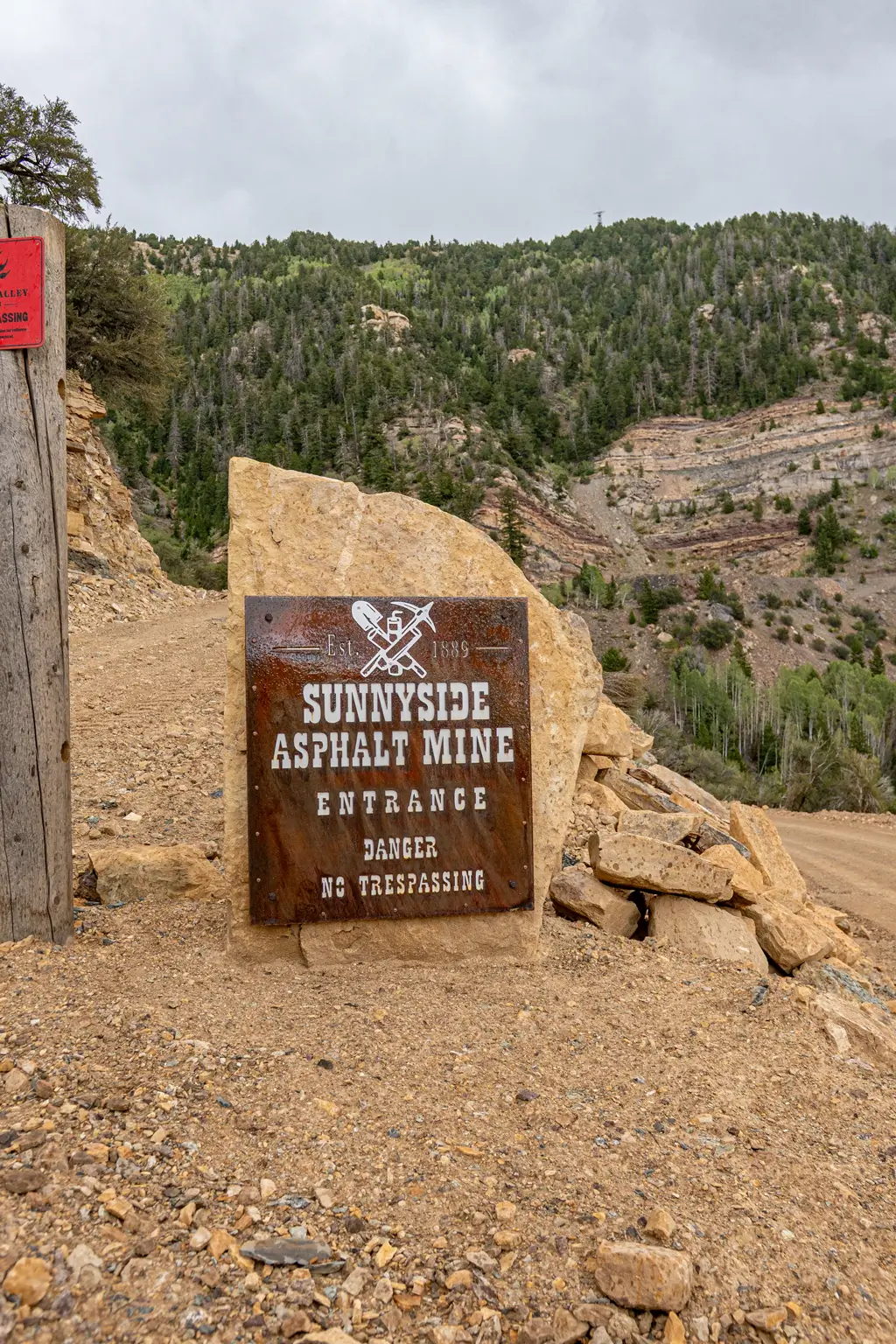

1889–1911
Chapter 1: The Road Gets Started: The Early Years
The story of asphalt in Utah begins in 1889, when the Utah Asphaltum Company was organized on May 8 and officially incorporated a month later, on June 7, in Salt Lake City. By April 1890, property owners along Commercial Street (now Regent Street) wanted their road paved with something new—rock asphalt—and awarded the job to Utah Asphaltum. But by May 13, some had second thoughts, and the city stepped in to take over the contract. That September, the company shipped a load of asphalt rock to Denver for testing. The trial went well, and by October 1, Utah Asphaltum officially secured the Commercial Street contract. Paving wrapped up between December 1890 and January 1891, delayed slightly by winter weather.
By 1894, the company had shifted direction. Moving away from paving, it began producing varnishes and petroleum-based products, rebranding itself as the Utah Asphalt & Varnish Co. Though the company originally used crushed rock asphalt from the Uinta Basin—despite later confusion about its origins—its first major job was paving Commercial Street between 100 South and 200 South. But the paving business didn’t last long, and by the mid-1890s, its focus had turned to gilsonite and other petroleum products.
Fast-forward to August 1901, when Salt Lake City awarded its largest paving contract to date. This time, the city chose Trinidad asphalt, hauled all the way from the Caribbean.
Enter the Pittsburg-Salt Lake Oil Company. In January 1905, it began acquiring asphalt lands in Utah and Wyoming. By 1908, the city was debating where to source asphalt for First South. That year, the company—formed out of the old Atlantic and Pacific Oil Company—owned asphalt-rich lands in Carbon, Grand, and Uintah Counties and was operating mines near Sunnyside.
In early 1909, the company secured a trust deed to fund a refinery and expand its operations. They claimed their process could refine asphalt for $9.50 per ton and sell it for $15.50. They even tried to undercut competitors by offering asphalt to Salt Lake City for just $7 per ton, though rock from the Thistle quarry was going for $5. Alongside mining, they ran a paint factory and planned to build a roofing factory in Salt Lake and a refinery near Westwater or Sunnyside.
But the enterprise didn’t last. On September 25, 1911, the courts foreclosed, and by December, the sheriff had auctioned off the company’s assets—including valuable claims like Surprise No. 1, Last Chance, Sunnyside No. 8, and Black Jack Placer. By July 1912, the company was broken up and reorganized into three new entities: the Utah Asphalt Company, which continued asphalt mining; the Utah Hydrocarbon Company, which pursued non-oil ventures; and a third, unnamed company that drilled oil wells in Wyoming.
Not all asphalt used at the time was local. Trinidad asphalt—mined from a natural asphalt lake in the British colony of Trinidad—was popular for street paving across the U.S. and Canada. It offered more traction (especially useful for horses) and withstood heavy traffic, but its cost was high due to long shipping routes. That expense eventually drove cities to seek homegrown alternatives. As of 2003, ( correct in original article) more than 9 million tons had been mined from Trinidad, with another 10 million tons estimated to remain—enough to last another 400 years at then-current extraction rates.
1910–1928
Chapter 2: Inspections and the Fight for Local Asphalt
Back in late April of 1910, a group of Salt Lake City councilmen and other local officials made their way up into the hills about five or six miles above Sunnyside, Utah. They were headed to the Pittsburg-Salt Lake Oil Company’s asphalt beds to see for themselves whether Utah’s own asphalt rock was worth a damn. For years, the city had favored asphalt shipped in from California, but folks were starting to question why they weren’t using what was right in their backyard. After poking around the site, the visitors agreed: Utah’s asphalt looked to be stronger and better than the California stuff they’d been paying for. This trip was part of a growing effort to prove the local product had both the quality and the volume needed for serious street work. Samples were taken back to Salt Lake and tested by the city engineer. A few people were already pushing the city to let contractors use local material if they wanted.
Just a couple weeks later, on May 5, 1910, the Pittsburg-Salt Lake Oil Company announced it was going to build a mill right there in Sunnyside to start processing the asphalt rock. By the end of May, folks were talking more specifics: the beds covered around 480 acres and were made up of layers of sandstone and shale, sloping gently north. The asphalt was packed into three big sandstone ledges—two of them nearly 100 feet thick. Experts figured there was a near-bottomless supply of the stuff, more than enough to keep paving roads for years to come.
On June 20, 1911, another group of city engineers and officials came out to the site to check if the company really could deliver 60,000 tons of asphalt rock for a new highway from Salt Lake to Ogden. After the visit, they agreed it was doable. The deposit was huge, and with the mine sitting just five miles from a railroad spur, hauling it out wouldn’t be too hard with a decent wagon road. Another inspection followed on July 6, 1912. This time, the visiting group called it the largest natural asphalt deposit they’d ever seen—stretching out for miles through the canyons. The main men behind the company were A. V. Taylor and J. Heber Richards, both based out of Salt Lake City. Later that same year, on October 31, two new outfits were formed: the Utah Asphalt Company and the Utah Hydro-Carbon Company. They had the same folks running them, including Taylor and Richards. This looked like a move to clean up the paperwork and get the business in better shape to grow.
By fall of 1913, Taylor was saying they were ready to deliver three carloads of asphalt a day to contractors. They were building a treatment plant in Salt Lake, too. He admitted they’d had problems early on, but blamed it on folks not heating the asphalt right—not the rock itself. Delays in delivery, he said, were due to slow orders from contractors, not because they couldn’t keep up with demand.
In October 1916, Richards filed for mining patents on the company’s claims near Sunnyside. By year’s end, the patents were granted. But tragedy struck the next summer. On June 18, 1917, Richards died of heatstroke while scouting a mine near the Colorado River, about 25 miles outside Las Vegas. He was just 42. After that, Taylor packed up and headed to Texas to manage his oil business. His wife, Blanche Powers Taylor, was listed as the owner of the Sunnyside claims. Taylor came back to Utah in 1921 when Blanche fell ill. She passed away that August. After that, Taylor moved to Los Angeles, where he lived out the rest of his days. He died in 1939 at age 74. With Richards gone and Taylor retired, the Utah Asphalt Company slipped into silence. The mine sat still.
In mid-1925, things stirred again. A legal notice ran on July 31 giving any heirs of Richards or Blanche Taylor 90 days from April 27 to pay up—$422.62 for upkeep on the mining claims in Whitmore Canyon. If they didn’t, Ralph T. Richards, J. Heber’s brother would take full ownership.
Later that same year, two men—A. B. Christy and John P. Hutchinson—picked up an option on the Utah Asphalt property. Hutchinson was made general manager, and they talked of firing things back up. A story from 1928 looked back at the early days, saying the deposit was discovered around 1901 by two men (they mixed up the names as Taylor and Richardson). According to the story, Taylor died before the company got going, and the rest of the team let it fall apart. Legal tangles and family inheritances kept it all on ice until Christy and Hutchinson breathed some life back into it.
1928–1950
Chapter 3: Up the Mountain and Down the Line
The Utah Rock Asphalt Company got its start on January 28, 1928, incorporated out of Denver with directors from Pueblo, Colorado. Led by president C. N. Power, the company aimed to work a massive deposit of bitumen-rich sandstone tucked up near Sunnyside, Utah—what folks called rock asphalt. By early May, a caravan of 5-ton Federal trucks rolled into town, and crews began building a spur line off the Denver & Rio Grande Western Railroad to reach the old Silica site in Water Canyon. It wasn’t the first go at mining rock asphalt up there—a venture in 1904 had ended in disaster—but this new effort moved forward with purpose. By August, the company fired up a new mill and shipped its first batch, turning out about 250 tons a week. Plans soon followed for an aerial tramway to replace the rugged truck route.
In January 1929, they signed on with American Steel & Wire to build a three-mile tramway, finished in time for the 1930 season. Stretching 3½ miles from quarry to mill, the tram dropped over 2,500 feet in elevation, carried on 28 towers across the steep canyon. With bucket spans ranging from 250 to 2,250 feet, and heights reaching 250 feet above the ground, it was a sight to behold. Sixty-three steel buckets moved a ton a minute—each hauling up to 1,200 pounds of raw asphalt down to the lower terminal, where trucks carried the load to the mill. Once crushed and screened, the rock was packed into railcars bound for roads across the West. By 1930, the plant was producing 500 tons a day and supporting over 60 jobs—even as the Great Depression tightened its grip.
Yet financial strain soon set in. On May 10, 1932, the Carbon County sheriff posted a notice to auction off the company’s assets to pay back taxes. The list included equipment, trucks, and 325 tons of asphalt—but notably, not the tramway, likely due to separate financing. Rumors swirled that it cost $16 a ton to produce, but buyers were only willing to pay $8.
A lifeline arrived in March 1933, when Henry H. Jones—an original builder of the quarry, mill, and tram—leased the operation and restarted it under a new name: the Rock Asphalt Company of Utah. By April, the quarry was running again, and in June, Jones moved to settle land titles and cut ties with the old Colorado outfit. A 56-ton crusher was hauled up the canyon to boost output. By year’s end, over 10,000 tons had shipped out, and another winter pause followed.
From 1934 through the 1940s, business climbed. In 1934 alone, 92 men worked the site, and daily output reached 400 tons. Utah rock asphalt paved streets, curbs, and sidewalks from Carbon County to Grand Junction. The product had a loyal following: it could be laid cold, hardened under traffic, and didn’t sag or creep like the cheaper oil-based stuff. But it was never an easy sell. Competition from petroleum asphalt—refined in Salt Lake City since 1908 and Woods Cross from 1932—meant constant pricing pressure. Oil mulch and oiled gravel were cheaper, easier to apply, and steadily gaining favor with road commissions.
Still, company president H. C. Means wasn’t quiet about it. In 1936, he publicly criticized the Utah State Road Commission for giving oil mulch the nod over rock asphalt, insisting his product outlasted the rest. By 1947, the material was still going down on Salt Lake City streets—despite the lack of a formal contract. City officials defended the choice, saying the rock asphalt held its shape in gutters and resisted wear, even if it cost double.
Behind it all stood the tramway—working day in and day out from 1929 to 1947. It became a defining feature of the operation, a steel lifeline running from the high ridges of Patmos Mountain down to Sunnyside. The deposit itself was no small thing. First found near the turn of the century by George Holladay and Doss Tidwell, the ridge held a bitumen (a viscous, black, sticky substance that is naturally occurring solid or semi-solid form of petroleum) vein over 1,000 feet thick, stretching some 17 miles. Word was it contained more than 800 million tons—enough asphalt to lay a 64-foot-wide road around the globe three times over.
Though the tram saved labor and risk, the rock itself posed plenty of problems. Packed with grit and tar, it gummed up crushers and screens, slowed production, and forced constant maintenance. The company poured money into lab testing, upgraded screens, and expanded its plant repeatedly to keep up with demand. Still, by the late 1940s, the writing was on the wall. On October 23, 1947, Henry H. Jones stepped down as general manager amid talk of reorganization. The tramway was retired, and road improvements allowed trucks to handle the haul. Then, on June 30, 1948, Jones was killed in a car crash—a major blow to the operation and community alike.
In 1949, a new chapter began. The Ute Rock Asphalt Company leased the quarry, mill, and equipment, made upgrades, and carved a new haul road along the tram’s old path. Production resumed in April. But the old company’s debts finally caught up. On April 27, 1950, the Rock Asphalt Company of Utah lost its assets at a sheriff’s auction. Ute Rock Asphalt stepped in with the winning bid and took over the quarry, mill, and mining claims—ready to carry on the work started decades before. With the Ute Rock Asphalt Company now at the helm, the mine’s future entered a new and uncertain phase.
1947–1950s
Chapter 4: Peak and Process
In the October 9, 1947 edition of the Price Sun-Advocate, an article shone a spotlight on Utah’s rock asphalt deposit just east of Sunnyside—a formation thought to be the largest and richest of its kind in the nation, maybe even the world. It was estimated that the deposit held about 800 million tons of rock asphalt. The mining outfit sat high up—9,040 feet above sea level—carved into a mountain that topped out at 10,000 feet. To get to the quarry, crews traveled a narrow private road that zigzagged its way up the rugged terrain.
The mining process was a sight to behold. Giant shovels clawed the asphalt out of the mountain, sending it down the valley to crushers by way of a one-of-a-kind aerial tramway. That tram system stretched across 14 miles of cable—seven miles for hauling, seven for the return—and ran 63 big buckets, each loaded with 1,200 pounds of rock. A full loop took about an hour and a half. Once it reached the mill, the asphalt went through several steps—getting crushed, rolled, and finally pounded by a hammer mill until it turned into a fine powder, soft as flour. Each load was rigorously tested for quality before it was shipped for paving.
At the time, Eugene Pressett, the man in charge at Sunnyside, shared that they were experimenting with mixing in oil emulsion to help the crushed asphalt hold up better in bitter cold. These tests were part of the ongoing push to improve the material’s toughness and durability. Geologically speaking, rock asphalt is something special—it’s a natural blend of asphalt and sand. Over time, oil seeps underground, the lighter parts drift away, and what’s left behind hardens into asphaltum that soaks into the surrounding sand. The end product is about 10% asphaltum and 90% silica sand—a true mineral oddity.
Rock asphalt’s story stretches far back. The world’s first paved road, laid in Paris in 1854, used the stuff. America’s first, Union Square in New York City, was paved in 1872 using Swiss material. Utah got in on it too—Salt Lake City’s Commercial Street was paved in 1891 using asphalt shipped in from Santa Cruz, California.
At Sunnyside, work mainly happened during the warm months. At its busiest, the quarry put 120 men to work, though only 35 stuck around during the harsh winter season.
1951–1968
Chapter 5: Decline and Shift
By July 2, 1951, the rock asphalt quarry near Sunnyside was back in motion—at least a little. But things had changed in a big way. The old aerial tramway, once the pride of the operation, wasn’t swinging buckets anymore. Instead, trucks were doing the whole job—hauling the rock straight from the quarry down to the mill in Sunnyside. That switch, first hinted at a few years earlier, was now fully in place. Whether it was rising maintenance costs or just the practical draw of rubber tires on gravel roads, the shift marked the end of an era. As the Sun-Advocate put it on July 12, 1951, the tramway was done for.
Ute Rock Asphalt kept on a little while longer, but signs of life were scarce by the end of 1952. A comb-through of newspaper clippings shows no mention of them that year, and just a single reference in 1953. That lone article said one of the company’s key men—a mining engineer with thirty years under his belt—had packed up from Dragerton, the coal camp that housed most of Sunnyside’s workforce, and taken a new job down in Pioche, Nevada. That move likely spelled the end for Ute Rock Asphalt. The trucks were idled, the crushers silenced, and the canyon returned to stillness. For years, the quarry lay mostly dormant.
A full decade later, on September 15, 1962, the Salt Lake Tribune reported that E. H. Snyder—already well known for running the Combined Metals Reduction Company near Tooele—had picked up a half stake in the old Utah Rock Asphalt property. All told, it was 600 acres of patented mining claims. Things stayed quiet for a spell, but on April 25, 1968, the Sun-Advocate sparked some buzz again: a crew was back at the Sunnyside mill, getting ready for a new run. The tramway was officially out of the picture, this time for good. Trucks were the new workhorses of the canyon, hauling rock like it was 1951 all over again.
1940s–1970s
Chapter 6: From Quarry to Research
A 1976 report out of the Eyring Research Institute in Provo helped explain why the rock asphalt operation declined. Starting in 1949, the Utah Oil Refining Company in North Salt Lake began using propane to pull asphalt from crude oil. Around the same time, Phillips Petroleum began using vacuum distillation in Woods Cross. These high-tech methods made asphalt cheap, clean, and easy to move—especially after demand for black fuel oil fell off after the war. The old-fashioned method of mining it out of the hills just couldn’t keep up due to the cost, labor intensity, and logistical challenges.
Utah’s refining capacity didn’t just improve—it boomed. Chevron’s plant went up on Salt Lake City’s north side in 1948. The next year, the Western States refinery—later known as Beeline—opened in North Salt Lake. And back in 1947, Phillips had already snapped up the old Wasatch refinery in Woods Cross. These modern facilities churned out bitumen and road asphalt by the tanker-full, slowly edging out the need for hand-dug rock. With easier, cheaper options rolling out of pipes and barrels, the Sunnyside quarry slipped into history.
According to the Utah Mining Industry report from 1967, the Sunnyside bituminous sand beds were a solid producer between 1930 and 1952. That last year alone turned out close to 30,000 tons of rock asphalt, priced at around $6 a ton. But 1952 also marked the end of the line. Competition from cheaper, refinery-made asphalt had undercut the old quarry operations. It wasn’t just about quality anymore—it was about economics, and the numbers no longer worked.
1970s–1980s
Chapter 7: Tar Sands and the Energy Gamble
The rock asphalt beds near Sunnyside were just one piece of a broader picture—Utah holds several kinds of petroleum-soaked stone. Alongside rock asphalt, there’s oil shale and oil sand, often called “tar sand” in these parts. All three contain the makings of oil, but getting that oil out has never been easy. Unlike traditional wells, where oil flows under pressure, these stubborn formations require heat, pressure, and patience—and a good deal more money.
Oil shale is a tight, fine-grained rock packed with kerogen, a waxy substance that gives off oil when heated. Folks tried burning it like coal in the early days, but it’s never been efficient enough to catch on in a big way. Utah’s Uinta Basin is full of it, and while there’ve been plenty of plans drawn up to tap it, most ended in disappointment. Tar sand, on the other hand, is a loser material—sand or sandstone soaked through with thick, sticky bitumen. The kind found near Sunnyside isn’t too different from the famous Asphalt Ridge over in the Uinta Basin. With enough heat, that bitumen can be loosened up and turned into usable oil.
When oil got scarce and expensive in the 1970s, the federal government started hunting for alternatives. Oil shale and tar sands caught their eye. Problem was, the technology wasn’t quite ready, and private companies weren’t eager to gamble without some serious backing. That’s when the Synthetic Fuels Corporation—nicknamed SynFuels—was born in 1980. Uncle Sam offered up loans and grants to folks willing to take a crack at making oil from rock. What followed was a short-lived boom, with wildcat energy schemes popping up across Utah and Colorado.
One of the bigger players in the game was Standard Oil of Ohio—known to most as Sohio. They picked up 600 acres of old mining claims around Sunnyside post 1980, ground once worked by the Utah Rock Asphalt Company. The land straddled federal parcels and Utah’s school trust lands. Working through a subsidiary, Grand National Corporation (renamed GNC Energy in ’81), Sohio teamed up with Stancal Energy, a Chevron offshoot, to build a massive oil sands operation. They figured they could crank out 10,000 barrels a day at the start, maybe ten times that if things went well.
To get that sticky bitumen out of Sunnyside and into refineries, Sohio planned to haul it by rail—15 cars a day at first, bound for Chevron’s Salt Lake City refinery. If output hit their targets, they talked about laying a pipeline straight to Salt Lake. At the time, folks reckoned the deposit held around five million barrels of recoverable oil, a figure that stirred comparisons to the North Slope up in Alaska.
But the whole house of cards didn’t last. Oil prices leveled out, and Congress got cold feet. In 1984, SynFuels funding was slashed down to near nothing. That May, Chevron backed out of the Sunnyside project. By 1985, most tar sands ventures had dried up completely. The mix of high costs, shaky tech, and fading political interest spelled the end for Utah’s oil rock dreams.
With the oil dream dead, Sohio offloaded its Sunnyside leases to Kaiser Steel in 1985. Instead of chasing bitumen, Kaiser used the land to widen its coal operations. Later, in 1998, the leases were passed to Tower Resources, tied to Andalex. Before long, the ground once pegged for oil production became the West Ridge coal mine—a final turn from far-fetched oil ambitions to the steady business of coal mining in Utah’s backcountry. What began as a dream of pavement and oil ended, at last, with coal– a return to the bedrock industry of Carbon County.
2024–Present
Chapter 8: A Legacy Reclaimed — The Siaperas Family and the Veterans of Range Valley Ranch
On December 31, 2024, the Utah Rock Asphalt Mine found new life when it was purchased by Mike Siaperas and Range Valley Ranch, marking the first major chapter in the mine’s history in over half a century. But this was not just a business acquisition—it was a homecoming.
Mike’s father, Andrew Siaperas, was born in Sunnyside and, as a young boy, would ride the mine’s aerial tram buckets for fun—long before safety protocols could stop a boy’s imagination. That childhood memory, shared across generations, planted the seed of something greater. For Mike, this was personal. It was about honoring a legacy, preserving history, and creating a place of healing.
Now part of Range Valley Ranch, a private retreat dedicated to honoring and supporting America’s veterans, the mine is undergoing a careful and respectful restoration. The goal: to bring the site as close as possible to its original working condition while transforming it into a living museum of industry, grit, and American ingenuity. This is more than a restoration—it’s a resurrection. Under Mike’s stewardship, the mine will serve as an educational experience for veterans, school groups, and history lovers alike. Visitors will walk the same paths miners once did, see restored equipment, and learn how rock asphalt helped build roads across the West.
The once-forgotten site now stands not just as a monument to early 20th-century industry, but as a place of purpose, patriotism, and peace. From tram buckets to bunkhouses, from black rock to blacktop, the story continues—woven now with the sacrifices of our veterans and the heart of a family that never forgot where it came from.
In the hands of the Siaperas family and the warriors of Range Valley Ranch, the Utah Rock Asphalt Mine lives on—not just as a relic of the past, but as a bridge to something greater.
Historical Marker : Fun Fact
A roadside marker, put up by Matt Warner Chapter 1900 of E. Clampus Vitus, tells more of the story. It sits at the crossroads of U.S. Highway 6 and State Route 123—the road to Sunnyside—and gives visitors a peek into the area’s early mining days. Back in the 1890s, folks started digging for rock asphalt in Whitmore Canyon, about 15 miles northeast of Sunnyside. That mine shuttered in 1898, reopened in 1903, and limped along until 1915, when it finally folded thanks to stiff competition from the newer sheet asphalt. In 1927, another company tried to breathe life back into the operation, pouring more than $500,000 into gear, including a 3.5-mile-long tram powered by gravity. But by 1931, they’d gone belly-up. The Rock Asphalt Company of Utah took over in 1932, running the place a few months each year. Interest in the deposit bubbled back up in the 1970s, though it never amounted to much. The historical marker was officially dedicated on July 10, 1993.
References
Don Strack, Utah Rock Asphalt, UtahRails.ned. Last Modified May 21, 2016.
https://utahrails.net/mining/utah-rock-asphalt.php